


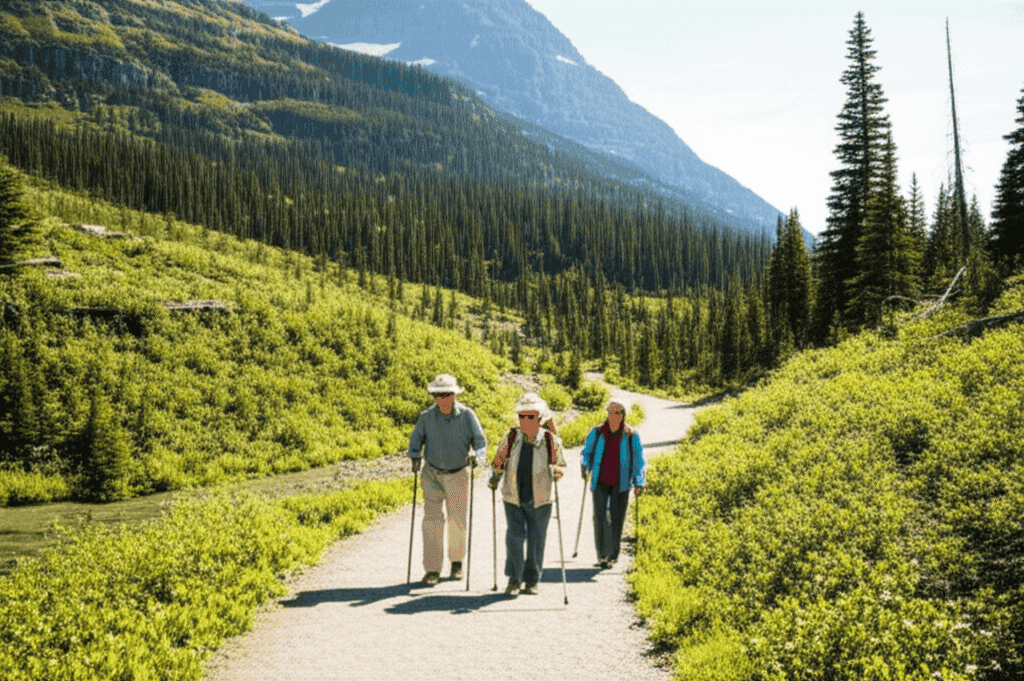
Glacier National Park is known for its striking mountain peaks and calm lakes, and it welcomes hikers from all over. Older visitors who prefer to skip difficult or tricky terrain will find plenty of gentle routes that pair comfortable walking with beautiful views. This guide is meant to help experienced travelers choose outings that suit their fitness, health, and comfort, so the visit feels relaxed and enjoyable. Read on to see how you can take in the park’s natural beauty at an easy pace.
The tips and trail suggestions below are practical and grounded in real conditions that hikers often report. You will find simple safety ideas, advice on choosing the right trail, and several trail options grouped by difficulty. The goal is to make planning a day in Glacier less stressful and more enjoyable.
Glacier National Park Senior Friendly Hiking Trails Guide with quick planning steps
Before you set out think through five basic items. First, check current weather and park alerts. Second, pick a trail that fits your usual walking distance. Third, plan for frequent rests and a slower pace than you might use at home. Fourth, bring layers since mountain weather can shift fast. Fifth, let someone know your plan and estimated return time.
For seniors who use a cane or trekking pole the extra support can make a big difference on uneven sections. Many ramps, boardwalks, and flat lakefront trails are well suited for walkers who prefer a mellow pace. If you travel with family choose a route everyone can enjoy so you can stop for photos and a relaxed lunch.
How to choose trails based on slope and surface
Trail surface and slope directly affect comfort level. Smooth paths, well packed dirt, and boardwalks are less tiring than rocky or root filled trails. Gentle slopes under 200 feet of gain per mile are ideal for steady breathing and lower strain on knees.
Read park notes and trail profiles
Park maps and trail descriptions list distance and elevation. Add a margin to these numbers. For example if a trail is listed as two miles assume it could feel like two and a half due to stops and slower pace. Look for routes described as easy or flat and watch for any mention of loose rock or steep sections.
Look for low elevation gain options
Elevation gain matters more than total distance for many older hikers. A three mile path with 100 feet of gain will often feel easier than a two mile path with 500 feet of gain. If you want scenic payoff without hard climbs choose lake loops and valley floor paths where the terrain stays mostly level.
Best easy trails that deliver big views with less effort
Below are several routes known for easy grades and high scenery value. Each offers resting spots and an opportunity to step off the trail should you want shorter turns. These routes are popular for a reason and are often less crowded early or later in the day.
- Lake McDonald Loop A short lakeside walk with smooth grading and frequent benches. The shoreline views are classic Glacier and the path often has shade.
- Trail of the Cedars A level boardwalk through old growth trees. It is flat, close to parking, and offers a cool, shaded experience in warm weather.
- Swiftcurrent Lake Nature Trail Open views of mountains and water with minimal elevation change. Wildlife is visible from a distance and benches are placed for resting.
- Many Glacier Hotel Loop Easy promenade near the lake with historic architecture and gentle terrain. This path works well for an afternoon stroll with stops at historic spots.
These paths are excellent for testing how your legs respond to trail walking and for enjoying the park when you prefer a relaxed schedule. If you want a short hike with a scenic turnaround pick one of the routes above and add a picnic.
Moderate trails that remain senior friendly with pacing
Some routes require a bit more stamina yet are manageable when approached with steady pacing. These trails typically include modest hills and variable surfaces. Plan for more breaks and consider using a trekking pole for balance on sections with loose rock.
- Hidden Lake Overlook via Logan Pass A well maintained path with a steady grade and a spectacular reward. The overlook is reached in about one to two hours depending on pace. For some hikers the full descent to the lake may be too rough so the overlook provides a satisfying goal.
- Trail to Avalanche Lake A shaded route that includes a few narrow spots but mostly packing friendly surfaces. The lake at the end is scenic and offers picnic spaces.
- Two Medicine Lake Shoreline Slightly longer than a short loop and with some rolling terrain. The lakeside sections are level and allow you to stop for rests while enjoying the view.
When attempting moderate routes plan to start early to avoid afternoon winds and increased wildlife activity. Carry snacks and water to maintain energy for the return walk which can feel longer.
Seasonal timing tips to make each outing safer
Timing within the season affects trail conditions. Late spring can still have snow on higher paths while mid summer brings the warmest temperatures and the most stable surfaces. Fall offers cooler weather and fewer visitors though some amenities may close for the season.
- Early season Check for lingering snow that can hide trail edges and create slippery spots.
- Mid season Expect fully open roads and cleared trails. This is often the most reliable window for easy travel.
- Late season Shorter daylight hours require earlier start and a strict turnaround plan to avoid being on trails after dark.
Wildlife movement also changes with season. Bears are more active in spring and fall. Carry bear spray where allowed and keep a safe distance. Many trailheads post recent sightings and that information can help you pick a route with lower likelihood of close encounters.
Gear choices, pacing, and group strategies
Appropriate gear reduces fatigue and helps with comfort. Key items include sturdy shoes with good tread, a hat, layered clothing, and water. For older hikers a lightweight day pack with a small first aid kit and a compact seat pad can make breaks more pleasant.
- Use trekking poles to reduce knee stress while ascending and descending.
- Wear shoes with ankle support on uneven sections to lower trip risk.
- Bring a water filtration straw or tablets if you plan to refill from lakes
Pacing matters more than speed. Aim for a rhythm you can hold while talking. Short frequent rests keep legs from seizing and make the outing more sociable. When hiking with others assign a steady person to set pace and another to watch the clock so you return before fatigue sets in.
Medical and emergency planning
Carry any prescribed medications in their original containers and have emergency contacts written in a place that is easy to reach. A compact cell phone battery pack extends phone life and a whistle can alert others in case you need help. If you have mobility concerns consider arranging a support person to join your hike.
Where to find more details on specific routes and services
For trail maps and seasonal notes the park service offers official updates and local visitor centers can provide trail condition reports. Community sites and park guides offer user reports on footing and bench locations which can help you choose the best path for the day. For a curated list of paths that are especially suitable for older hikers check this resource on Glacier National Park trails which highlights low slope options and nearby services.
Final preparation checklist for a confident outing
Use this checklist before you leave your lodging. Confirm parking availability and road status. Check weather and bring an extra warm layer even in summer. Eat a balanced meal and bring high energy snacks. Pack water and an easy to reach hat for sun protection. Finally, pace yourself on the trail and accept that rest stops are part of a successful hike.
When you return take a few minutes to record how you felt during the hike. Note which sections were tiring and which offered comfortable walking. This simple feedback makes next time easier to plan and improves your overall comfort over multiple visits.
Glacier National Park offers many options for seniors who want memorable outings without unnecessary strain. With modest planning, sensible gear, and a focus on trails with gentle grades you can enjoy spectacular views, wildlife from a safe distance, and peaceful lakefront walks. If you are ready to see specifics and map your next walk follow the park focused list linked above and pick two or three short routes to try this season. Share your plan with a friend and set a realistic turnaround time. The park rewards thoughtful pacing and small adventures that fit your comfort level. If you need help picking the best day or route consider contacting a local visitor center for recent trail updates and parking tips. Enjoy the trip and come home with photos and a calm feeling from time spent outdoors.